
If you’ve been dragging a hose around your yard every few days, or watching your St. Augustine grass turn brown during Palm Beach County’s dry season: you already know something needs to change. A properly installed irrigation system isn’t a luxury here. With six months of little to no rainfall and SFWMD watering restrictions that carry real penalties, the stakes are higher than most homeowners realize. This guide covers everything you need to know: how the installation process works, what separates a good system from a bad one, and what questions to ask before anyone starts digging up your yard.
How Sprinkler System Installation Works in Palm Beach County
Most homeowners picture a crew showing up and starting to dig. The reality is that a quality installation starts well before any trenching happens. It begins with a site assessment, someone walking your property, measuring your yard, noting your plant types, checking water pressure, and mapping out where each zone needs to go.
From there, we design a system specific to your property. That means separating lawn zones from shrub or flower bed zones, selecting the right sprinkler heads for each area, and accounting for your property’s water pressure so every head performs the way it should. Once the design is finalized, permits are pulled, yes, permits are required in Palm Beach County, and then the physical installation begins.
What Happens During Installation: From First Dig to Final Walkthrough
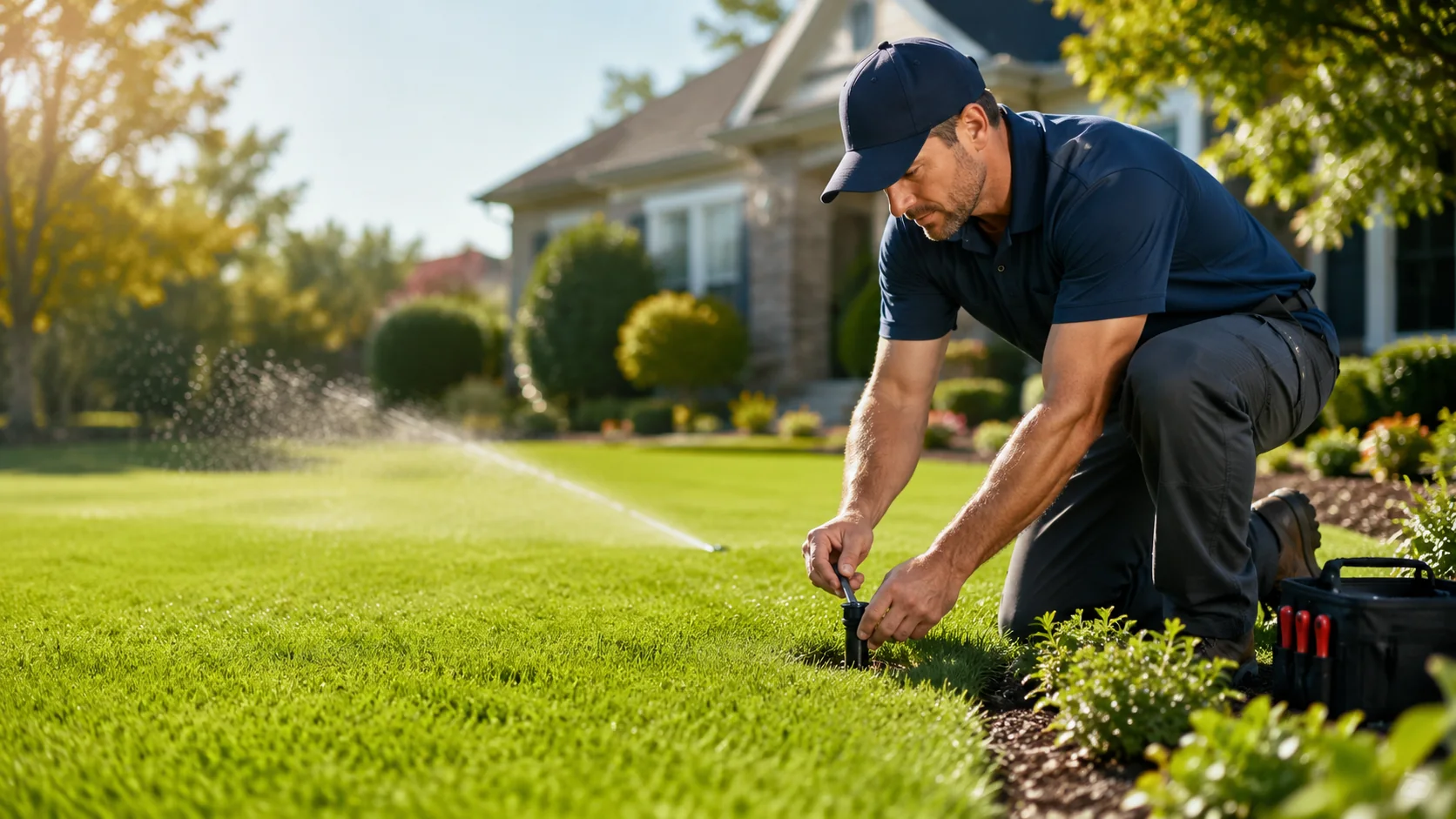
The installation itself typically takes one to two days for most residential properties across Palm Beach County. Trenches are cut to lay the underground piping, heads are positioned and connected, and the controller is wired and mounted. In Palm Beach County’s sandy soil, trenching is relatively clean work, the ground is easy to cut through, and it backfills neatly without leaving your yard looking like a construction site for weeks.
Once everything is in the ground, the real work begins: testing. Every zone gets run individually to check for even coverage, proper water pressure, and any heads that need adjustment. This is where we catch problems before they become expensive, a head that’s spraying the sidewalk instead of the lawn, or a zone that’s running too long and creating soggy patches.
After testing, we program the controller. And this is where local knowledge matters more than most people expect. Palm Beach County falls under South Florida Water Management District rules, which means your system has to run on a specific schedule. Even-numbered addresses are permitted to water on Tuesday, Thursday, and Sunday. Odd-numbered addresses water on Monday, Wednesday, and Saturday. And regardless of your address, no one is allowed to water between 10 AM and 4 PM any day of the week.
A smart controller handles all of this automatically. It adjusts for weather, responds to rainfall, and keeps your schedule within the legal window without you having to think about it. We program every system we install with these restrictions built in, and we walk you through the basics before we leave, so you’re not staring at a controller panel trying to figure out what any of it means.
The permit process is worth mentioning separately, because it surprises some homeowners. Palm Beach County requires a Certificate of Competency for anyone doing irrigation work, and the county is known for enforcing it. We handle all the permitting paperwork as part of every installation, which means you’re covered from a compliance standpoint and there are no surprises at resale.
Why System Design Makes or Breaks Your Irrigation Results
The most common irrigation problems we see across Palm Beach County, dry spots, soggy areas, brown patches despite daily watering, almost always trace back to a design issue, not an equipment failure. And most of those design issues were baked in from the beginning.
One of the most frequent mistakes is mixing sprinkler heads with different application rates on the same zone. If one head puts out water faster than another, you end up having to overwater part of your lawn just to adequately cover another part. Over time, that leads to root rot in one area and drought stress in another, and neither one looks good.
Zone separation matters just as much. Your lawn and your flower beds don’t need the same amount of water, and they definitely don’t need it delivered the same way. A spray head designed for turf coverage isn’t the right choice for a shrub bed, and running both on the same zone means one of them is always getting the wrong amount. A well-designed system accounts for plant type, sun exposure, and soil drainage before a single head gets placed.
South Florida’s sandy soil adds another layer of complexity. Sandy soil drains quickly, faster than most people expect, which means shorter, more frequent watering cycles tend to work better than long, infrequent ones. A system designed without that in mind can leave your grass thirsty even when it’s technically getting watered on schedule.
Floratam St. Augustine, which is the dominant grass type across Palm Beach County communities from Boynton Beach to Jupiter to The Acreage, is particularly unforgiving when irrigation is inconsistent. It doesn’t go dormant gracefully: it dies. A system that’s designed around its actual needs, rather than a generic Florida lawn template, makes a real difference in how your yard holds up through the dry season.
The Real Benefits of a Properly Installed Irrigation System
People often assume a sprinkler system is going to drive up their water bill. It’s one of the most common concerns we hear, and it’s almost always wrong. A well-designed system with a smart controller typically reduces water usage significantly compared to manual watering or a basic timer, because it eliminates the guesswork and the waste.
More than 50% of South Florida residents’ water usage goes to landscape irrigation. That’s a significant number, and most of it is inefficient. Overwatering is far more common than underwatering, especially during the wet season when afternoon thunderstorms are a near-daily occurrence. A smart controller with weather-sensing capability adjusts automatically, so your system isn’t running the morning after a two-inch rainstorm.
How Much Water and Money Can a Smart Irrigation System Save?
Smart controllers can cut water bills by 40 to 60 percent compared to traditional timer-based systems. That’s not a marketing claim: it’s what happens when a system responds to actual weather and soil conditions instead of running on a fixed schedule regardless of what’s happening outside.
Think about what that means in practical terms. If landscape irrigation accounts for more than half your water usage, and a smart system cuts that in half, the impact on your monthly bill is real and ongoing. Over the course of a year, especially through Palm Beach County’s long dry season when your system is running regularly, those savings add up.
There’s also the cost of not having a properly functioning system to consider. A lawn that dies during a dry season doesn’t just look bad. Replacing mature Floratam sod, re-establishing plant beds, and dealing with HOA notices about lawn condition all cost money. Many communities across Palm Beach County, from gated neighborhoods in Palm Beach Gardens to established subdivisions in Lake Worth Beach, have HOA requirements that mandate maintained, green lawns. A dead or patchy yard isn’t just an aesthetic problem; it can trigger fines.
A properly installed system also protects the investment you’ve already made in your landscaping. Mature trees, established shrubs, and well-maintained ornamental beds take years to develop. Consistent, correctly timed irrigation keeps that investment alive through the dry months when rainfall disappears entirely.
The water efficiency angle also connects directly to SFWMD compliance. Running a system that wastes water, or runs outside the permitted schedule, isn’t just costly. It can result in fines and enforcement action. A system designed for efficiency from the start keeps you on the right side of those regulations without any extra effort on your part.
Common Questions Palm Beach County Homeowners Ask Before Installing a Sprinkler System
One of the questions we hear most often is whether a permit is really necessary for a residential irrigation system. The short answer is yes, and Palm Beach County enforces this more strictly than most counties in Florida. Irrigation work here requires a Certificate of Competency, and unpermitted installations can create problems when you go to sell your home or if the county conducts an inspection. We pull all required permits as part of every job, so that’s never something you have to chase down yourself.
Another common question is how long the installation takes. For most residential properties in Palm Beach County, the physical installation is completed in one to two days. The timeline can vary based on yard size, the number of zones required, and whether any access complications come up, but we give you a clear picture of what to expect before we start.
Homeowners also ask about the watering restrictions fairly often, and it’s worth addressing directly: the SFWMD schedule is not optional, and the rules apply year-round, not just during drought conditions. If your system isn’t programmed to comply, or if you’re running it manually without knowing the rules: you’re at risk of a violation. Smart controllers eliminate that risk entirely by keeping your schedule within the permitted windows automatically.
A question that doesn’t come up as often as it should is what happens after the installation is done. The honest answer is that we don’t disappear after the final zone test. We program your controller, walk you through how to make basic adjustments, and make sure you know how to reach us if something comes up. That’s not extra: it’s part of doing the job correctly.
Finally, people ask whether they can install a system themselves to save money. In Palm Beach County, the licensing requirement makes DIY installation a legal issue, not just a practical one. Beyond the permit problem, the design complexity, zone layout, head selection, pressure balancing, SFWMD compliance, is significant enough that a poorly planned DIY system often ends up costing more to fix than a professional installation would have cost to begin with.
Get a Sprinkler System That Actually Works for Your Palm Beach County Property
Getting irrigation right in Palm Beach County isn’t complicated, but it does require knowing the local rules, understanding how South Florida’s soil and climate behave, and designing a system around your specific property rather than a generic template. When those pieces are in place, the results speak for themselves: a healthier lawn, lower water bills, and a system that runs within SFWMD guidelines without you having to think about it.
If you’re ready to stop guessing and start with a system that’s built correctly from the ground up, Sprinkler Contractors of Palm Beaches LLC is here to help. with a five-star rating from every customer who has reviewed us from homeowners across West Palm Beach, Boca Raton, Jupiter, Boynton Beach, and beyond, we’ve spent decades learning exactly what Palm Beach County properties need, and how to deliver it. Reach out today for a free estimate and find out what a properly designed irrigation system can do for your yard.