Sprinkler System Installation: Step-by-Step Guide for Florida Lawns
Summary:
How Lawn Sprinkler Installation Works in Florida
Professional irrigation system installation isn’t a one-size-fits-all process. Every yard in Palm Beach County has different sun exposure, soil composition, and landscaping needs. That’s why our installation starts with assessment, not equipment.
We walk your property looking at how water currently moves across your lawn. We note low spots where water pools, areas that dry out first, and sections shaded by trees or structures. We’re checking soil type because sandy soil common in Florida drains completely different than clay-heavy soil found in other regions.
We also measure water pressure at your main line and calculate flow rate. These numbers determine how many zones your system needs and what type of sprinkler heads will work best. You can’t just install as many heads as you want—your home’s water supply has limits, and exceeding them means weak pressure and poor coverage across all zones.
What Happens During the Site Assessment for Sprinkler Installation
The site assessment is where installation quality gets determined. This isn’t a quick walkthrough—it’s a detailed analysis of your property’s specific irrigation needs that directly affects how well your system performs for the next 20 years.
We map your entire yard, noting dimensions and existing landscaping. We identify which areas get full sun versus partial shade because these zones need different watering schedules. Full-sun turf in Florida’s heat needs more frequent irrigation than shaded areas under tree canopies.
We also look at your grass type. St. Augustine grass, the most common choice in Palm Beach County, has different water requirements than Bahia or Zoysia. Each grass type has an optimal root depth, and your irrigation system needs to deliver water to that depth without oversaturating the soil or allowing runoff.
Soil testing happens next. Florida’s sandy soil holds about one inch of water in the top 12 inches, which is where most grass roots live. That means your system needs to apply water slowly enough for sandy soil to absorb it, not so fast that it runs off into the street before reaching root zones.
We check your property’s slope and drainage patterns. Even slight grades affect how water distributes across your lawn. Low spots might need adjusted coverage to prevent oversaturation, while higher areas might need additional heads to compensate for faster drainage.
We locate your main water line and test pressure at different points. Most residential sprinkler systems need between 40 and 65 PSI to function properly. If your pressure falls outside this range, you might need a booster pump or pressure regulator added to the system design.
Finally, we identify any underground utilities. This step isn’t optional—it’s required. Hitting a gas line, electrical conduit, or cable during trenching creates dangerous and expensive problems. We call 811 before any digging starts to have utilities marked.
The assessment typically takes one to two hours for an average residential property. When it’s complete, you get a detailed system design showing exactly where heads will be placed, how zones will be divided, and what equipment the installation requires.
Understanding Irrigation Zoning for Florida Properties
Zones are the backbone of efficient irrigation. Each zone is a group of sprinkler heads that operate together on the same valve and timer schedule. How your system gets divided into zones determines whether your lawn thrives or struggles through Florida’s demanding climate.
Florida Building Code requires irrigation systems to be divided based on six factors: plant type, sun exposure, soil type, slope, sprinkler type, and water source. You can’t mix high-water-need plants with drought-tolerant areas on the same zone. You can’t combine full-sun turf with shaded sections. Each zone needs plants with similar water requirements.
Most residential properties in Palm Beach County need three to five zones for a quarter-acre lot. Larger properties or those with diverse landscaping might need more. Each zone typically contains five to ten sprinkler heads, depending on head type and coverage area.
Zone design also accounts for your property’s available water flow. Your home has a maximum gallons-per-minute capacity, and each sprinkler head uses a specific GPM based on its type and pressure. If you try to run too many heads simultaneously, pressure drops across all heads and coverage suffers.
That’s why zones exist—they allow your system to water different areas sequentially rather than all at once. Zone one might run for 15 minutes, shut off, then zone two starts. This sequencing ensures adequate pressure and proper coverage for every section of your lawn.
Florida’s water restrictions also influence zone design. Palm Beach County limits when you can irrigate, typically allowing two days per week during certain hours. Your zones need to complete their full cycle within those permitted windows. A system with too few zones might not finish watering before the restriction period ends. Too many zones might not provide enough water per application.
Smart zone design also separates turf from landscape beds. Grass needs overhead spray coverage, while shrubs and flowers often perform better with drip irrigation or bubblers that deliver water directly to root zones. Mixing these on the same zone wastes water and can damage plants that don’t tolerate overhead watering.
We also plan zones around practical considerations. We avoid placing heads where they’ll spray driveways, sidewalks, or building walls. We position zones so maintenance access remains easy. We ensure each zone has proper drainage and doesn’t create standing water in low areas.
Proper zoning means your lawn gets exactly the water it needs, where it needs it, without waste. It’s the difference between a system that maintains healthy turf and one that creates dry spots in some areas while oversaturating others.
The Sprinkler System Installation Process and Timeline
Once design is finalized, new sprinkler system cost gets determined and installation typically takes one to three days for most residential properties in Palm Beach County. The timeline depends on property size, system complexity, and soil conditions.
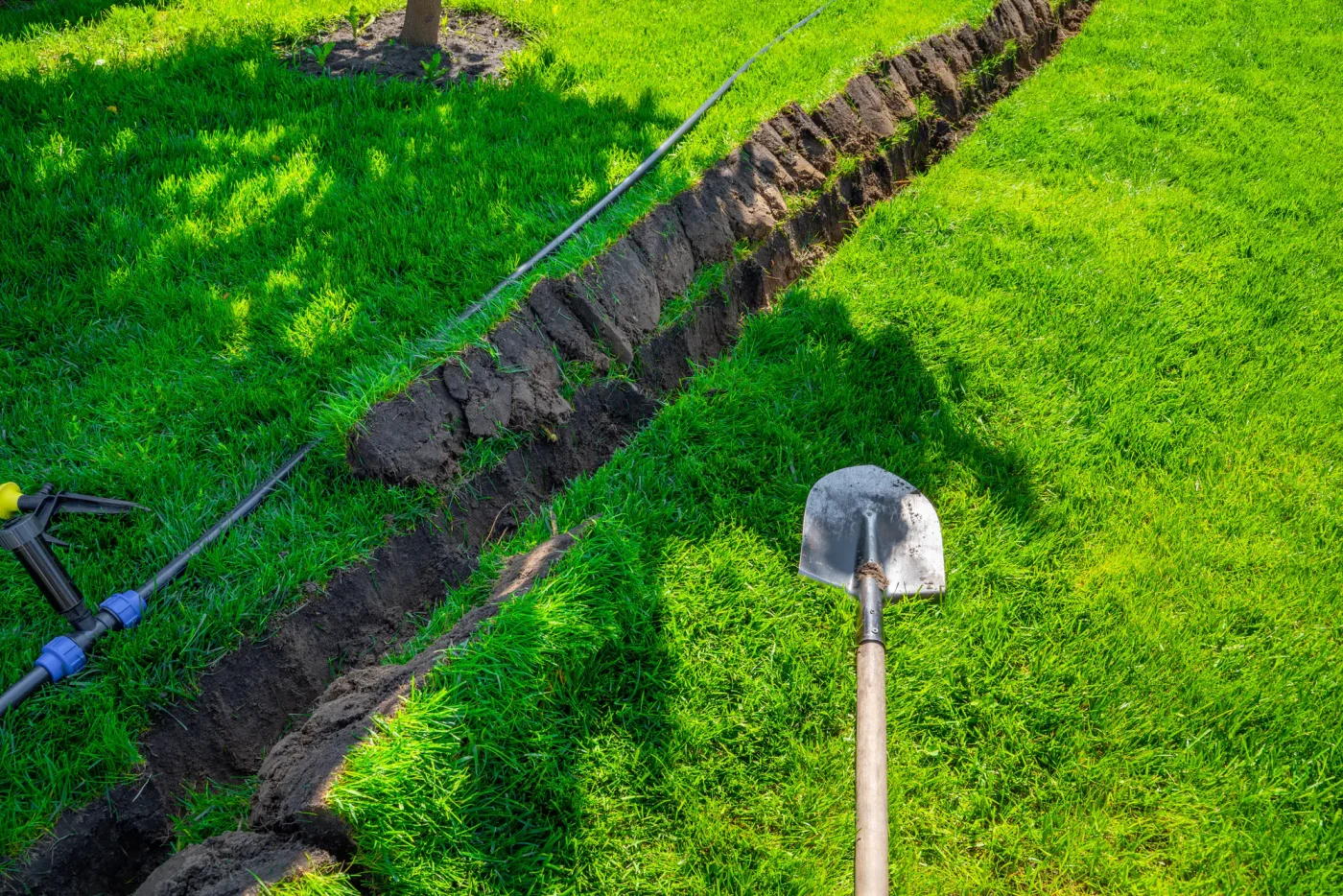
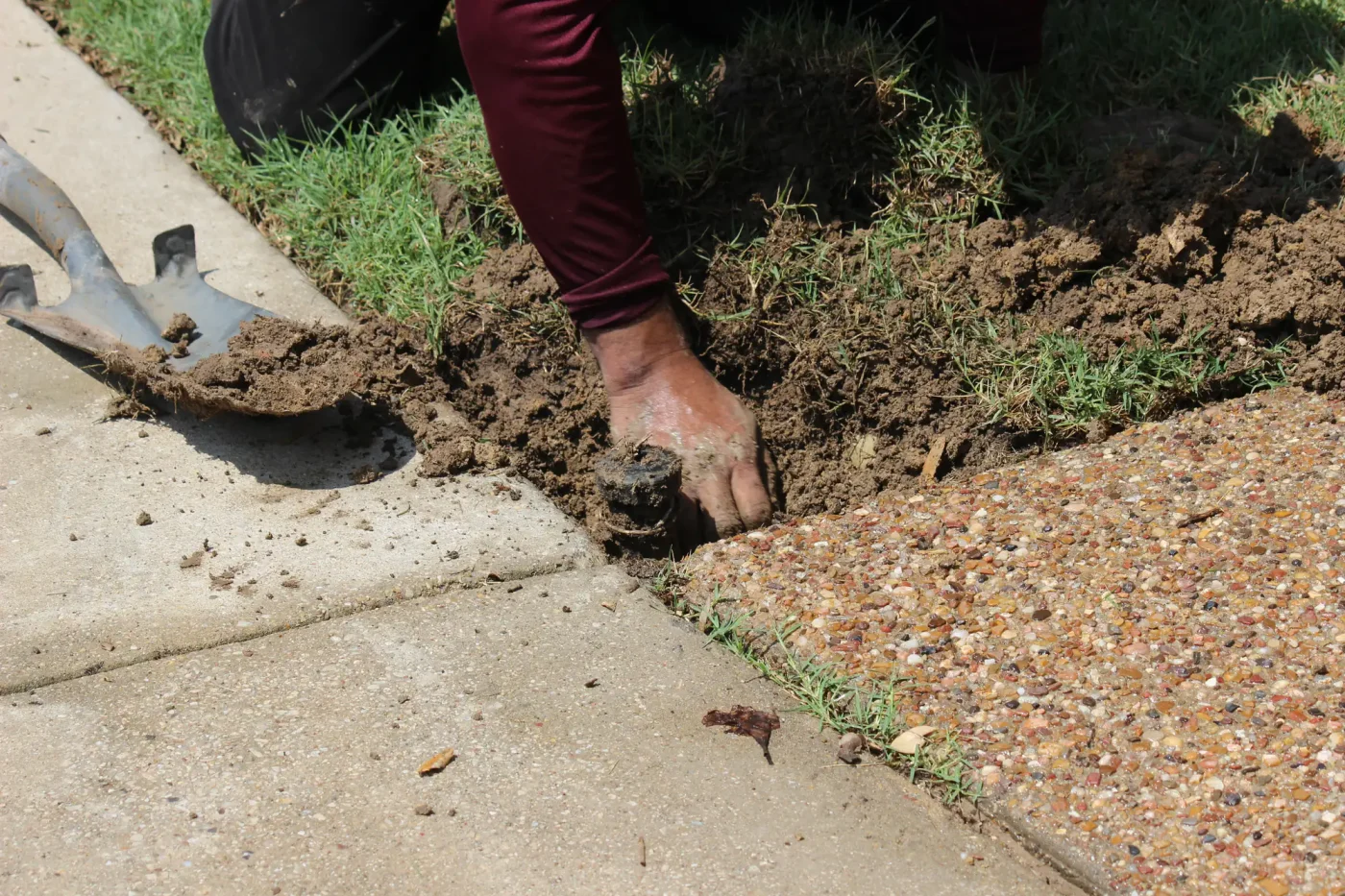
Installation starts with trenching. We dig narrow trenches six to 12 inches deep following the system design’s pipe routes. These trenches house the PVC pipes that carry water from your main line to each zone’s sprinkler heads. Trenching is the most disruptive part of installation, but we minimize lawn damage by carefully removing and preserving sod.
After trenches are dug, pipe installation begins. We lay PVC pipes in trenches, connecting them with fittings at each junction. We build the valve manifold—the assembly where all zone valves group together. This manifold controls water flow to each zone independently.
What Happens on Sprinkler Installation Day
Installation day starts early. We arrive with equipment, materials, and a detailed plan based on your approved system design. We stake out sprinkler head locations and mark trench routes with string or spray paint so you can see exactly where digging will occur.
Trenching comes first. For most residential sprinkler installation projects, we use a walk-behind trencher that cuts clean, narrow trenches with minimal lawn disruption. The machine moves quickly, but we work carefully around existing landscaping, trees, and hardscapes. Trenches typically run six to 12 inches deep—deep enough to protect pipes from foot traffic and lawn equipment, but shallow enough to avoid most underground utilities.
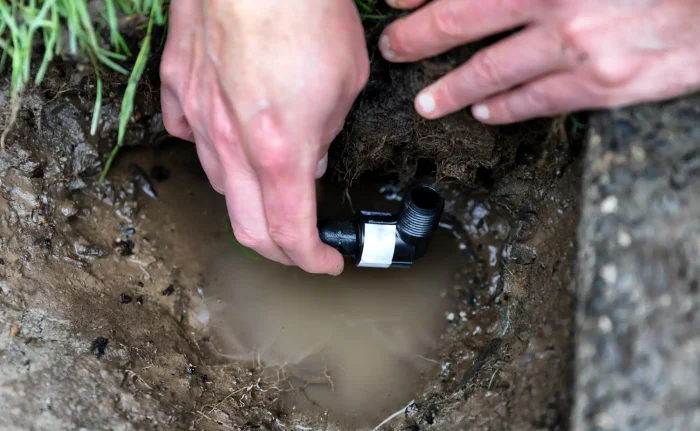
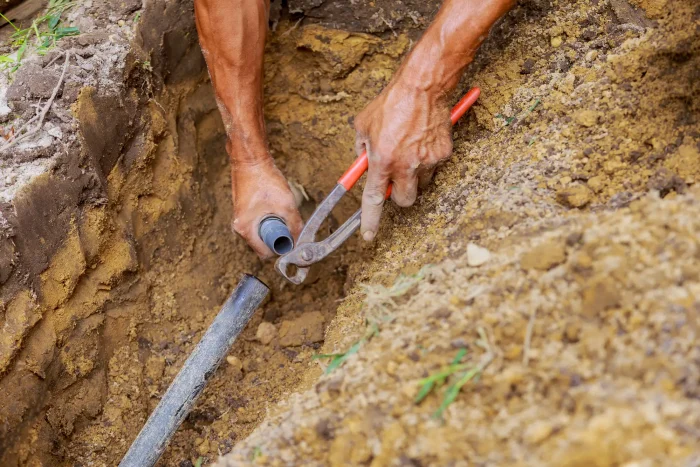
Once trenching is complete, pipe installation begins. We lay PVC pipes in trenches, cutting and fitting them precisely to match the design. We install tee fittings where pipes branch to individual sprinkler heads. Each connection gets checked for proper fit before moving to the next section.
The valve manifold gets installed in an accessible location, usually near your home’s main water line. This assembly contains one valve for each zone, plus the backflow preventer required by Florida code. The backflow preventer stops irrigation water from flowing backward into your home’s potable water supply—a critical safety feature that’s legally required on all irrigation systems.
We connect the manifold to your main water line. This step requires cutting into your existing plumbing and installing a tee fitting that diverts water to the irrigation system. If you’re uncomfortable with this step, many homeowners hire a licensed plumber specifically for this connection, then have us complete the rest.
After pipes are laid and connected, we flush the system. We open each zone valve and let water run through the pipes, clearing any dirt or debris that entered during installation. This flushing prevents clogs in sprinkler heads and ensures clean water flow from day one.
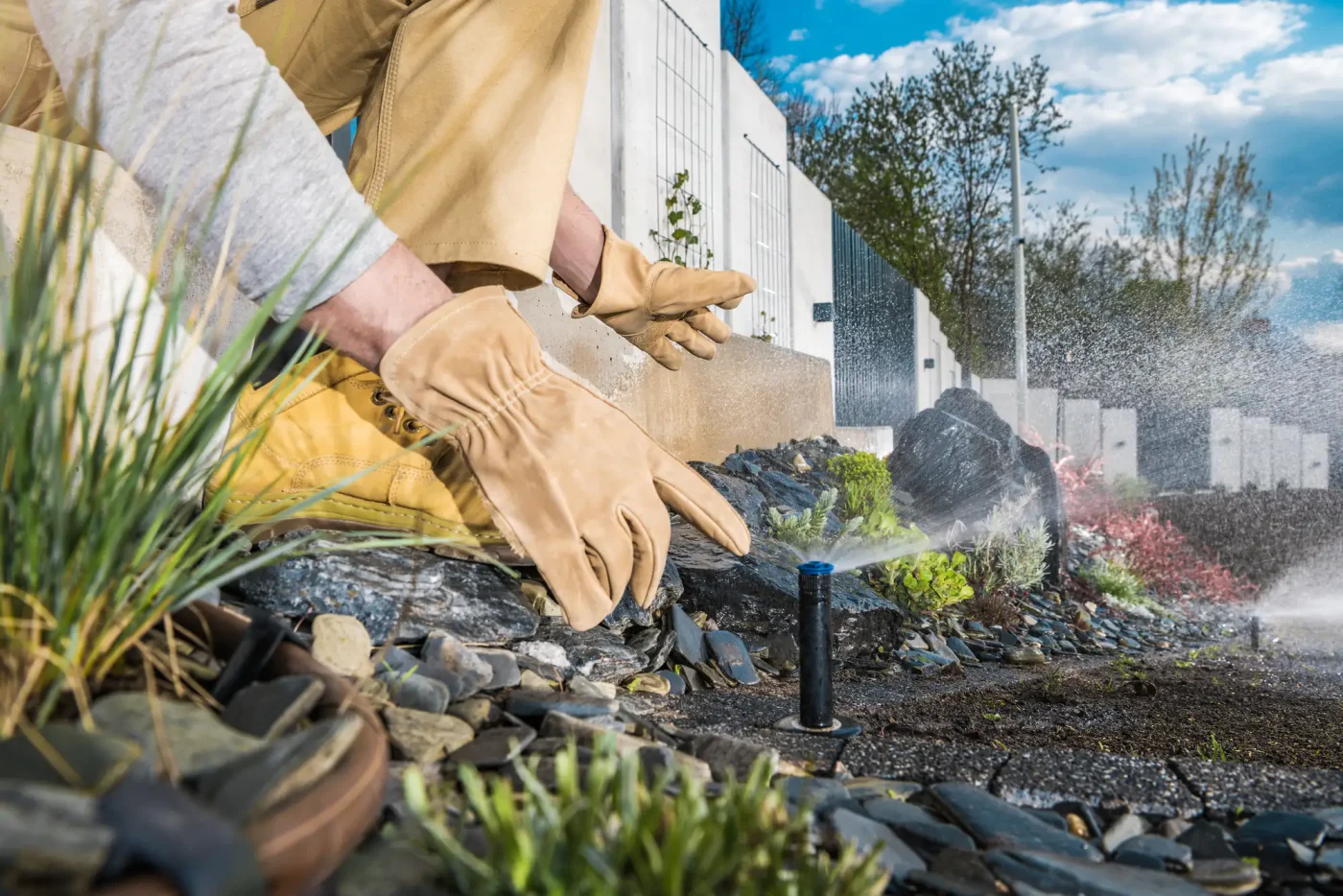
Next, sprinkler heads get installed. We attach each head to its designated pipe connection, ensuring proper height and alignment. Pop-up heads should sit flush with the soil surface when retracted. Rotor heads need correct arc adjustment so they don’t spray driveways or buildings. Spray heads require the right nozzle for their coverage area and water pressure.
Wiring comes after heads are installed. Each zone valve needs electrical connection to the controller—the timer box that automates your watering schedule. We run low-voltage wire from the controller to each valve, labeling connections so future troubleshooting stays simple.
The controller gets mounted in a convenient location, typically on an exterior wall near an electrical outlet. We program initial settings based on your lawn’s needs, local water restrictions, and seasonal requirements. We show you how to adjust these settings as weather and grass conditions change throughout the year.
Installation wraps with system testing and adjustment. We activate each zone individually, watching how water distributes across coverage areas. We adjust head angles, change nozzles if needed, and fine-tune spray patterns until coverage is even and efficient. We check for leaks, verify pressure is adequate across all zones, and confirm the rain sensor shuts the system off when it detects moisture.
Finally, trenches get backfilled and sod replaced. We pack soil carefully around pipes to prevent settling, then replace the sod we removed during trenching. We clean up completely, removing all installation debris and excess materials.
Most installations finish within one to three days. Simple systems on small, flat properties might complete in a single day. Larger properties with multiple zones, challenging terrain, or extensive landscaping might take the full three days. We provide a specific timeline during the design phase based on your property’s unique characteristics.
New Sprinkler System Cost Factors in Palm Beach County
Residential sprinkler installation costs in Palm Beach County typically range from $2,500 to $6,500, with most quarter-acre lots averaging around $3,500. Several factors influence where your project falls within that range.
Property size is the biggest cost driver. Larger lawns need more zones, more sprinkler heads, more pipe, and more labor. A quarter-acre lot might need four zones with 20 heads total, while a half-acre property might require six zones with 35 heads. Each additional zone adds equipment costs and installation time.
System complexity also affects price. A simple rectangular lawn with uniform sun exposure costs less to irrigate than a property with multiple landscape beds, mature trees, slopes, and varied plantings. Complex layouts need more zones, specialized heads, and careful design work.
Equipment quality matters. Basic spray heads cost less than rotary nozzles or rotor heads, but cheaper equipment might not provide the coverage or efficiency your lawn needs. Smart controllers with weather-based scheduling cost more than basic timers, but they can reduce water use by 20 to 40 percent annually, paying for themselves through lower utility bills.
Soil conditions impact installation difficulty. Rocky soil or areas with heavy tree roots slow trenching and increase labor costs. Sandy soil common in most of Palm Beach County trenches easily, keeping labor costs reasonable.
Permit requirements add to total cost. Most municipalities in Florida require permits for irrigation system installation, with fees typically ranging from $35 to $200 depending on your location. We usually handle permit applications as part of our service.
Additional features increase investment but provide long-term value. Rain sensors are required by Florida law on all systems installed after 1991. Smart controllers, soil moisture sensors, and pressure regulators cost more upfront but improve efficiency and reduce operating costs. Drip irrigation zones for landscape beds add equipment costs but deliver water more efficiently than spray heads.
Labor typically accounts for 40 to 50 percent of total project cost. Professional installation ensures your system meets Florida Building Code requirements, operates efficiently, and comes with warranty protection. DIY installation might save labor costs but risks improper design, code violations, and equipment problems that cost more to fix than professional installation would have cost initially.
We provide detailed quotes after completing site assessment. The quote itemizes equipment, materials, labor, permits, and any additional features. It also specifies warranty terms—we offer two years parts and labor coverage on our professional installations.
Financing options exist for homeowners who prefer spreading costs over time rather than paying upfront. Some contractors offer payment plans, or you might use a home improvement loan or line of credit. The investment typically adds value to your property—studies show irrigation systems recoup about 83 percent of their cost in increased home value while making your property more attractive to potential buyers.
When evaluating quotes for commercial sprinkler installation or residential projects, consider total cost of ownership, not just installation price. A cheaper system that wastes water or requires frequent repairs costs more long-term than a properly designed system installed by experienced professionals. Quality installation protects your landscaping investment and provides years of reliable, efficient irrigation.
Getting Your Florida Lawn Ready for Professional Installation
Professional sprinkler system installation transforms how you maintain your lawn. You get consistent coverage, automated scheduling, and water efficiency that manual watering can’t match. Your grass stays healthier through Florida’s intense summer heat and periodic dry spells.
The installation process itself is straightforward when you work with experienced contractors who understand Florida’s unique requirements—sandy soil, water restrictions, required rain sensors, and proper zoning for different plant types. Most residential installations complete within a few days, and quality systems last 20 years or more with basic maintenance.
Before installation starts, clear the areas where trenching will occur. Move portable items like furniture, planters, or decorations. Mark any underground utilities or irrigation lines from previous systems. Identify areas where you’ve noticed drainage problems or dry spots so we can address these during design.
After installation, give your new system a few weeks to prove itself. Watch how your lawn responds to automated watering. Look for areas that might need adjustment—spots that stay too wet or don’t get adequate coverage. We return for fine-tuning if needed, ensuring your system performs exactly as designed.
If you’re ready to stop wrestling with hoses and start enjoying a healthier, greener lawn, reach out to us at Sprinkler Contractors of Palm Beaches LLC. We’ll assess your property, design a system that works with Florida’s climate and regulations, and install it properly the first time.